Naturalistic Child Observation: Understanding a Child's Nature and Potential
Instead of guessing from one short test, naturalistic observation watches a child in real daily life. Here is how it works and why it helps.

Naturalistic observation means understanding a child by watching them in everyday situations where they feel at ease, not only in a testing room. From there we can see attitude, emotional regulation, learning style, and potential that often never shows up on a worksheet.
Why daily life is more honest than a single test
A child shows their true self when they feel safe, while playing, telling stories, or finishing something they enjoy. Naturalistic observation captures those moments, so the picture is fuller and not skewed by test anxiety.
What is observed
- How the child starts, focuses on, and finishes a task.
- How they handle frustration and excitement.
- Patterns of interaction with parents, friends, and surroundings.
- Interests and strengths that emerge naturally.
Which children benefit most
Naturalistic observation is especially helpful for children who may have ADHD, who are gifted, or who are twice-exceptional (2E), meaning bright children who also have specific needs. The goal is not to hand out a label but to map strengths and needs that family and school can actually use.
A diagnosis is a map, not a verdict. It points to a direction, not a limit.
Quick questions
- Will my child feel like they are being tested?
- No. We keep the setting natural so the child feels free to be themselves.
- How long does the process take?
- It depends on the need. Some cases take a few sessions, others need observation across more than one setting.
- What is the final result?
- A complete picture of the child's strengths and needs, with realistic, practical recommendations.
Have a more personal question?
One article cannot answer everything. If there is something on your mind, let us start gently.
More to read
 Education
How Much Does Seeing a Psychologist Cost in Indonesia? A Clear Overview
 News
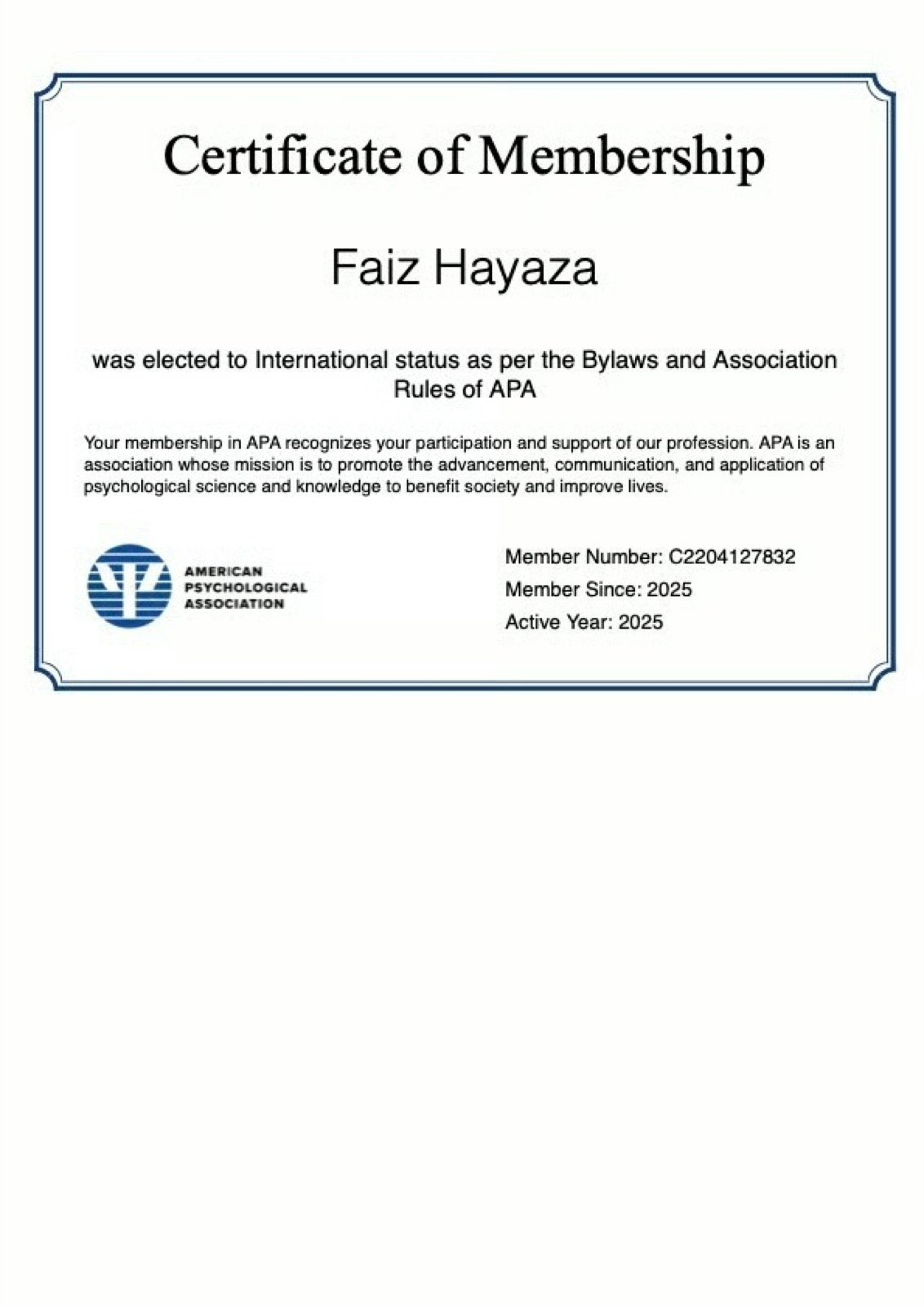
NewsFaiz Hayaza Officially Recognized as an International Member of the American Psychological Association (APA)
 Mental Health